Description
Overview
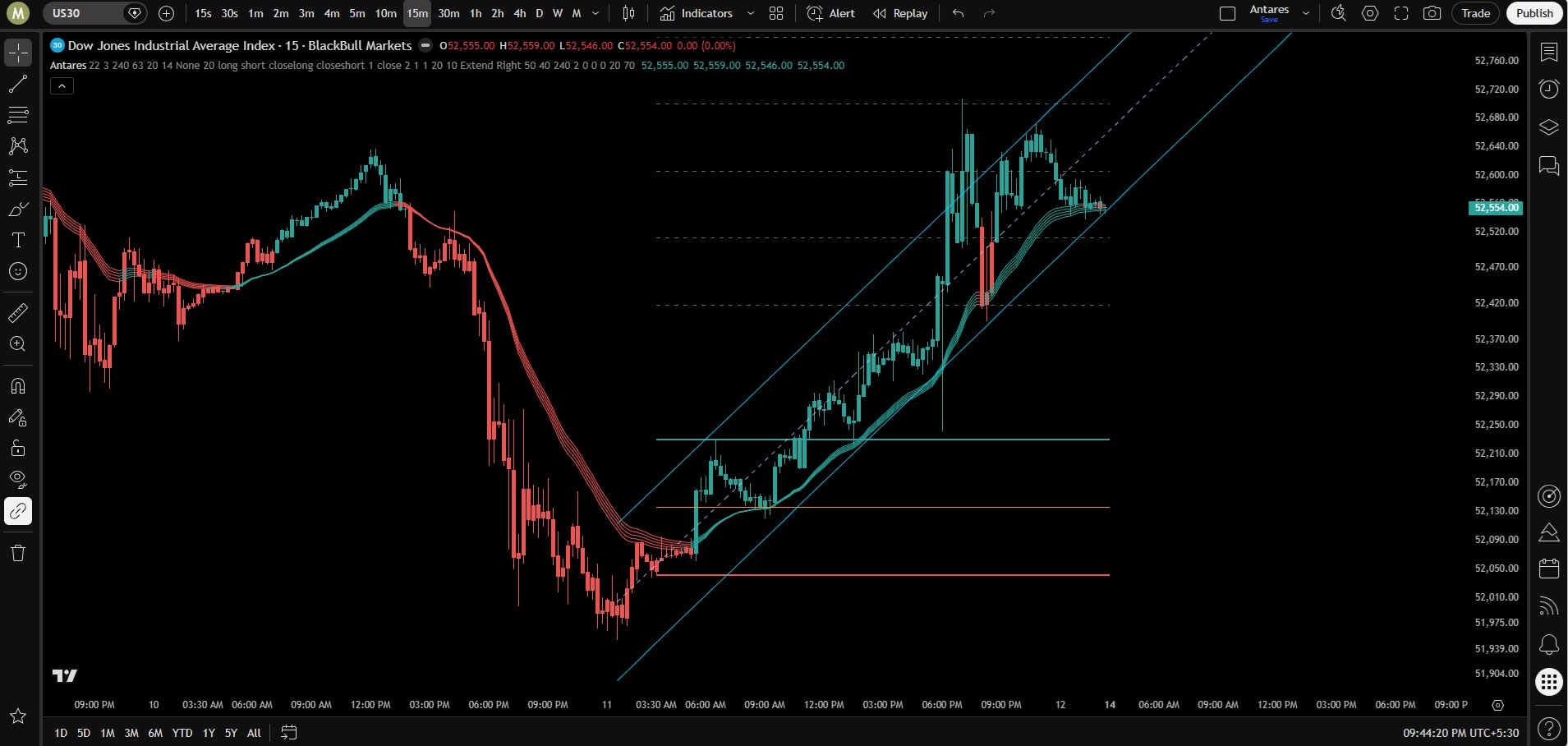
Antares was designed first and foremost as an intraday trading instrument. Every one of its components was chosen because it solves a problem specific to short-timeframe trading: knowing the trend without lag, knowing the day’s structural range without drawing a single box by hand, reading momentum without a cluttered oscillator pane, and knowing statistical fair value without running a private regression model. The four systems are not bolted together for the sake of a longer feature list — each was selected because intraday price action genuinely needs it, and each has been tuned to work quietly alongside the others rather than compete for attention on the chart.
Antares is not, however, confined to intraday charts. Its trend engine, momentum ribbon, and alerting system behave identically on Daily, Weekly, and Monthly charts. Two of its intraday-specific modules — the Opening Range and the Astra Band — are engineered to recognise when they no longer apply and step aside automatically, rather than clutter a timeframe they were never designed for. This behaviour is covered in full under Time Sensitivity part of the literature.
The Conceptual Idea
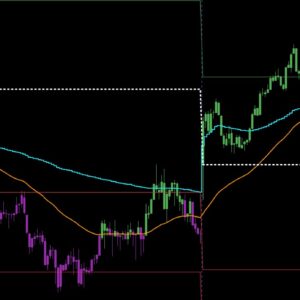
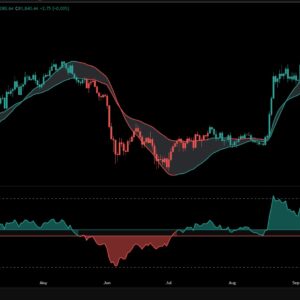
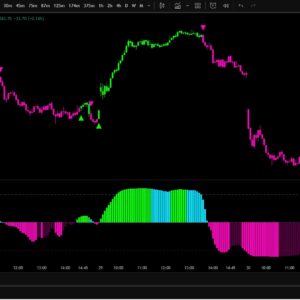
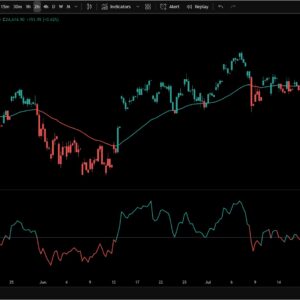
Every trading day begins the same way: price opens, volatility spikes, and for several minutes the chart offers nothing but noise. It is in this exact window — chaotic, fast, and unforgiving — that the gap between a prepared trader and an unprepared one becomes obvious. Antares was built for that window. It was built for the trader who refuses to guess where the range sits, refuses to eyeball trend direction from a bare candlestick chart, and refuses to trade the opening minutes of the session blind. Where most tools offer a single line or a single signal, Antares brings together four independent, purpose-built systems — a directional trend engine, a live Opening Range structure, a multi-strand momentum ribbon, and an adaptive statistical channel — and fuses them into one instrument, on one chart, without clutter.
Antares does not predict the market, and no honest tool can claim otherwise. What it does is give a trader clarity: a defined trend direction, a defined opening-session structure, a defined momentum read, and a defined statistical channel, all updating in real time. Every component earns its place on the chart because intraday trading has no patience for anything that doesn’t.
Why It Stands Out
In the opening minutes of any session, most traders are doing several things manually and under time pressure: drawing a range box by hand, eyeballing trend direction from raw candles, tracking two or three moving averages in their head, and trying to judge whether price has stretched too far from fair value — all before the moment to act has passed. Antares does not remove the trader’s judgement from that process, and it never claims to. What it removes is the friction: the range is already measured, the trend direction is already flagged, the momentum layers are already coloured, and the statistical channel is already drawn. What remains for the trader is the part that actually requires a trader — the decision.