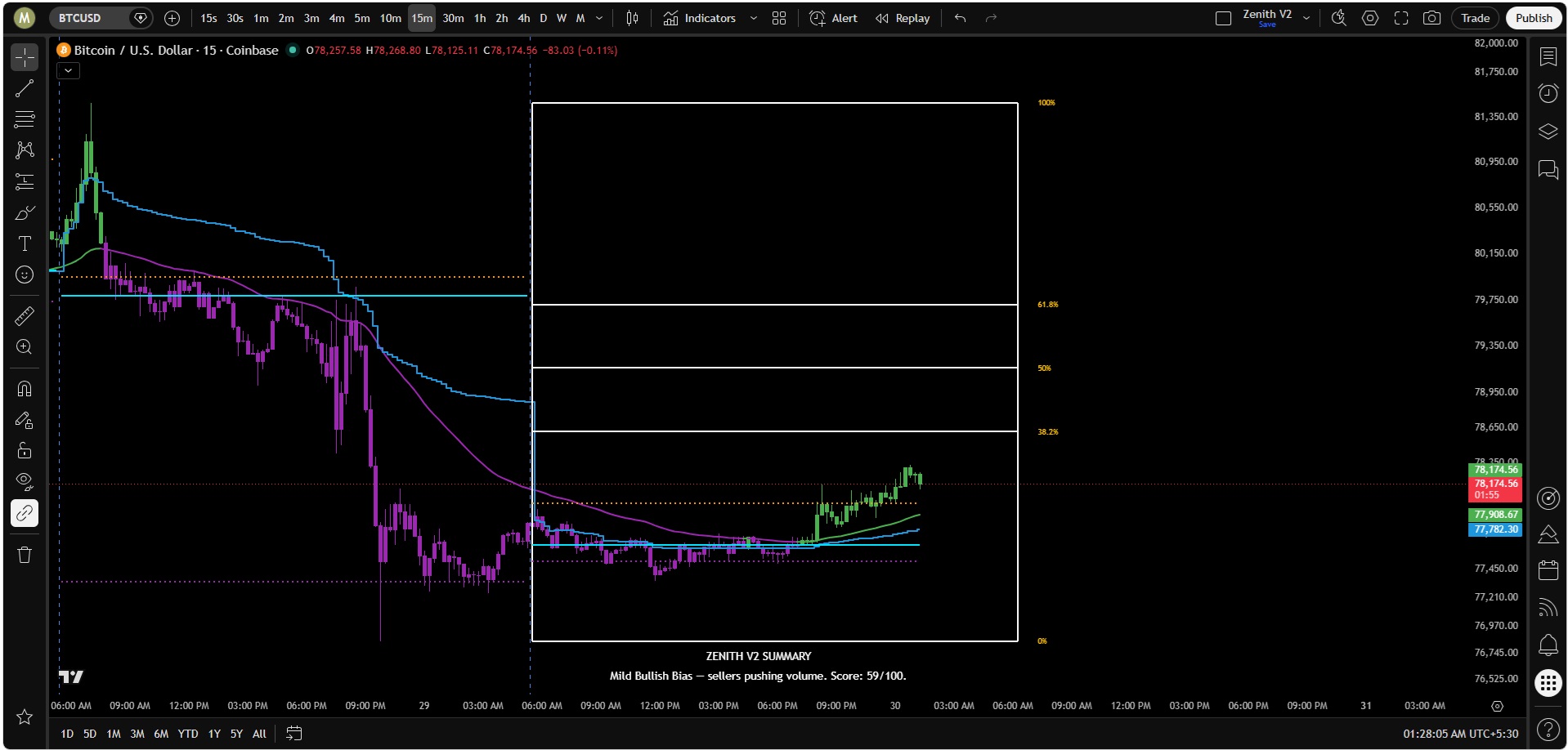
Description
Overview
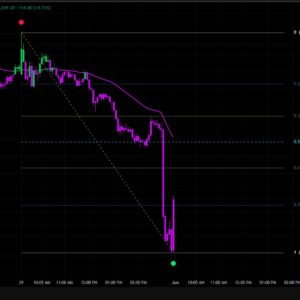
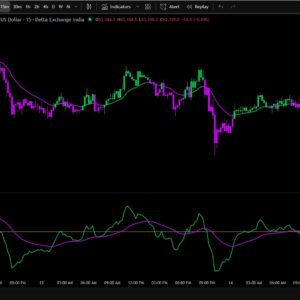
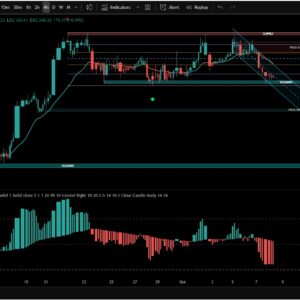
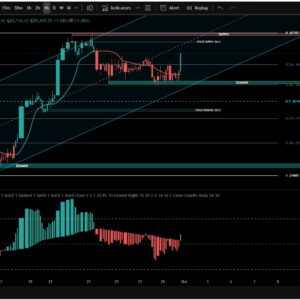
Zenith brings together, for the first time in this suite, a genuine auction-market-theory core — a native Volume Profile with Point of Control and Value Area — and combines it with a Previous Day Fibonacci Box, an optional VWAP module, and EMA-slope-colored Trend Candles. Everything is fused into a single Trade Score and a one-line, plain-English summary, so a trader can glance at the chart and immediately know whether the market currently favors buyers, sellers, or neither.
Zenith is automatically timeframe-aware. It runs its full engine — Volume Profile, Fibonacci Box, and VWAP — on intraday charts of 15 minutes or lower, and automatically simplifies itself above 15 minutes by hiding those session-specific elements. Trend Candles and the summary table remain active at every timeframe, with the summary table’s underlying Trade Score re-anchoring to a weekly or monthly Value Area on higher timeframes — all without the trader touching a single setting.
The Conceptual Idea
Every other indicator in this suite has approached the market from the price side — geometry, Fibonacci structure, statistical regimes, or momentum physics. Zenith approaches it from the volume side instead. Its foundation is auction market theory: the idea that price is not simply “where the market is,” but the outcome of a continuous auction between buyers and sellers, and that the volume traded at each price level reveals where the market actually found agreement — not just where it happened to pass through.
This shifts the question a trader is really asking. Instead of “where is price now,” Zenith asks “where did the market actually do business, who is currently in control of that business, and where is price likely to be pulled next.” Those three questions map directly onto Zenith’s three core measurements: the Volume Profile (where business happened), the Volume Delta bias (who is in control), and the prior period’s range (where price is likely to be pulled).
Why It Stands Out
Most retail indicators either show price-derived overlays (moving averages, bands, oscillators) or volume as an afterthought (a plain histogram beneath the chart). Very few retail tools build a genuine, native volume profile directly in Pine Script using real intrabar data, and fewer still combine that profile with a unified score that a trader can act on without further interpretation.
Zenith’s distinguishing edge is synthesis. Value Area location, volume delta bias, and prior-range positioning are three separate ways of asking “who is in control right now,” and Zenith answers that question once, in one sentence, rather than asking the trader to reconcile three separate indicators mid-trade. Combined with full timeframe-awareness — so the tool never shows an intraday-only concept on a chart where it would be misleading — Zenith functions less like a single indicator and more like a complete, self-adjusting trading companion.